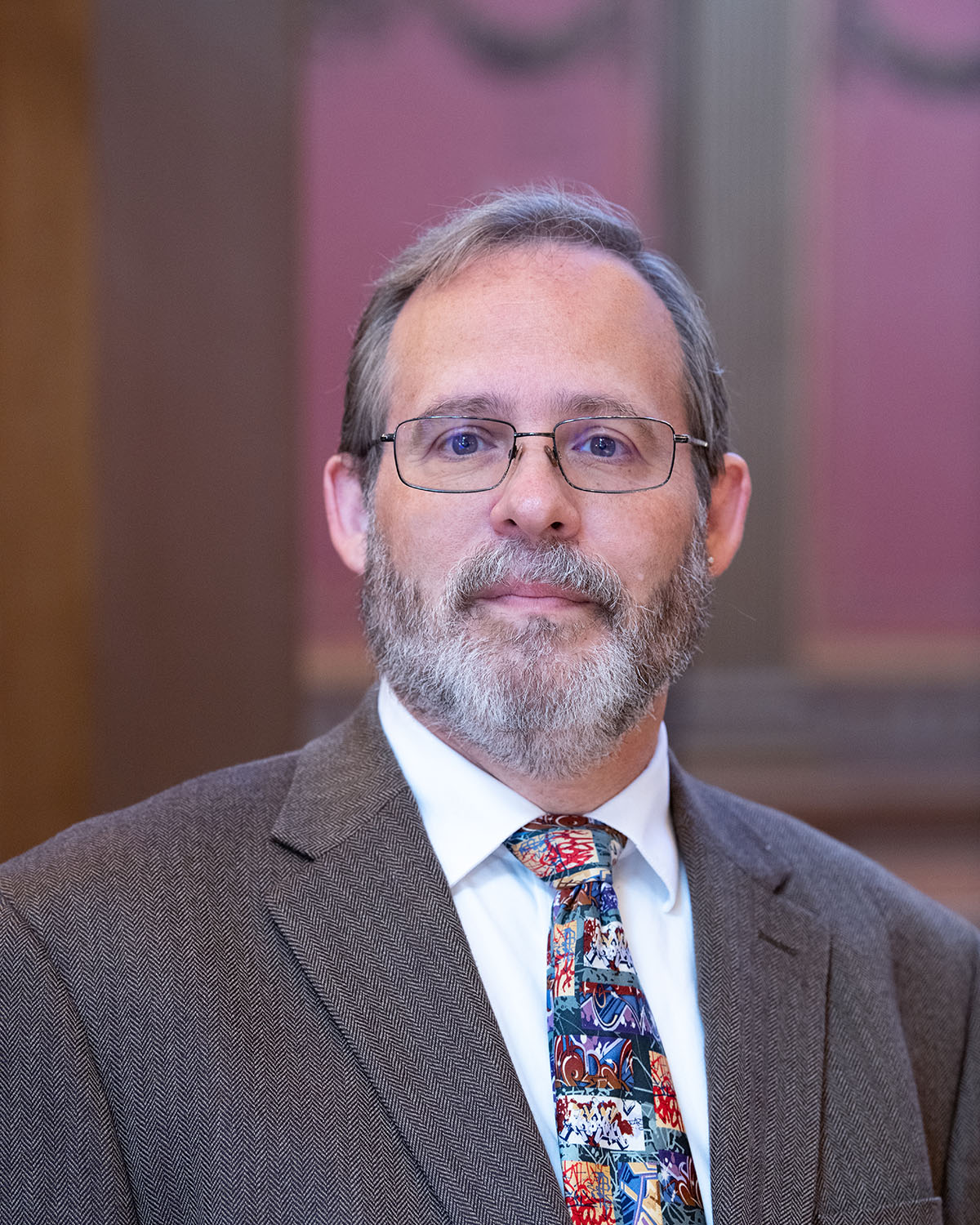
Blog Posts by Zachary Gorchow, Editor

Unclear How Jobs Argument Will Play In 2014
Posted: May, 20 2013 3:42 PM

One of the important subplots every time the state’s brightest economic minds convene at the Capitol to forecast state revenues for budgeting purposes is how the economy’s condition in upcoming years will affect the next election.

So last week, when the House Fiscal Agency, Senate Fiscal Agency and Department of Treasury agreed on an economic forecast that included the remainder of 2013 and 2014, two numbers stood out when considering the implication for 2014 when Governor Rick Snyder presumably will stand for re-election:

  • The number of jobs will continue to grow although, albeit steadily as opposed to robustly. Wage and salary employment will rise 1.3 percent this year to 4.077 million and another 1.2 percent in 2014 to 4.125 million.
  • The growth in jobs will continue the gradual reduction in the unemployment rate, which is now at 8.4 percent. Forecasters projected the calendar year rate for 2013 at 8.6 percent and 8.1 percent for 2014.

In the first half of 2012, when the unemployment rate began creeping upward, Democrats started to pounce, leveling the “Where are the jobs?” critique at Mr. Snyder that the opposition party, whichever party it is, deploys in such situations. Mr. Snyder, whose staff had touted the once falling rate as a sign his policies were working, instead began discussing how Michigan’s economic challenges remained and would not be solved overnight.

But after a recent peak of 9.4 percent in August, the unemployment rate has fallen a full percentage point and the number of people working has risen by 59,000.

What the forecast means is the political arguments are already set on the economy going into 2014.

Presuming the forecast holds, the Snyder campaign and the Republicans will say his policies have improved the economic climate. Democrats will counter that the bulk of the job growth since Mr. Snyder took office in 2011 stems from the auto industry rebound, especially when considering most of the growth occurred in 2011, before the big Snyder tax changes took effect.

Playing The Hitler Card
Posted: May, 8 2013 11:55 AM

Oakland County Executive L. Brooks Patterson’s labeling of House Speaker Jase Bolger as “Adolf Bolger” last week was not the first time a high-profile Michigan political figure tried to tarnish someone with a comparison to one of the worst tyrants the world has known.

Thanks to the Gongwer archives, and if you’re not a subscriber, access to our archives back to September 1993 is one of many good reasons to be one, I found several instances in the last 20 years of people playing the Hitler card in politics.

In 2006, the Detroit political consultant Adolph Mongo used a political action committee to purchase a newspaper ad comparing former Governor Jennifer Granholm to Adolf Hitler. Many months after Ms. Granholm won re-election, it was revealed that major Republican donors had donated to the PAC although all insisted they had no idea Mr. Mongo planned the Hitler ad.

In 1999, attorney Geoffrey Fieger, incensed at a Court of Appeals ruling against him, called the judges on the panel – Judge Michael Talbot, former Judge Richard Bandstra and Judge Jane Markey – Hitler, Joseph Goebbels and Eva Braun.

During the 1998 gubernatorial campaign, Mr. Fieger compared former Governor John Engler to Hitler and longtime Soviet dictator Joseph Stalin.

Also in 1998, the late Sen. George Hart likened legislation requiring the use of an imaging device to take the fingerprints of welfare recipients to something Hitler would do.

And in 1997, former Rep. Derrick Hale, a Detroit Democrat, unloaded on then-Rep. David Jaye as Mr. Jaye ran for the Senate. Mr. Jaye used an image of the civil rights leader Jesse Jackson as a way to attack a rival in a Senate election in a way Mr. Hale said was designed to inflame racial hostilities.

“David Jaye is the Fuhrer of the Legislature. He resembles Adolf Hitler in looks and character,” he said then.

And in 1994, the late Sen. Joe Young Jr. denounced the Lottery Bureau for a “Hitler-like approach” in saying it would implement a new Keno game even if voters rejected Proposal A, which contained the language to create the game.

Only Mr. Patterson, however, went so far as to hold a black comb over his upper lip to mimic Hitler’s infamous mustache to make his point, and he did it on a statewide television program. So while Hitler comparisons will likely happen again, if only relatively rarely, the odds of one again featuring a grooming accessory appear small.

A Familiar Refrain On Right To Work From Ohio
Posted: May, 3 2013 3:01 PM

Governor Rick Snyder’s phrase “not on my agenda” regarding right-to-work in Michigan became ubiquitous as he tried to avoid having the issue surface in the Legislature and then infamous when he declared he would sign the legislation and did so.

So Ohio Democrats who followed the right-to-work debate in Michigan probably are going to DefCon 1 after seeing the comments of Senate President Keith Faber, a Republican. Like Michigan, Ohio’s Legislature is controlled by Republicans and has a Republican governor, John Kasich.

Upon introduction Wednesday in the Ohio House of legislation to make Ohio a right-to-work state, Mr. Faber tried to cool the controversy by declaring … wait for it … that right-to-work is not on his agenda, my colleagues at Gongwer News Service/Ohio reported.

If that discouraged the two Republicans members of the Ohio House who introduced the legislation, they might want to contact Rep. Mike Shirkey (R-Clarklake), who heard the same from Mr. Snyder, stayed patient, kept working the issue and ultimately prevailed.

Similarly, if any Ohio Democratic lawmakers are breathing easy, now, their colleagues in Michigan could easily disabuse them of that notion.

In U.S. Senate Race, Republicans Missing A Key Weapon From ’94 Win
Posted: May, 2 2013 12:23 PM

Republicans began Wednesday trying to define U.S. Rep. Gary Peters, the newly minted Democratic U.S. Senate candidate, minutes after he formally announced in negative terms as everyone would expect.

But as the GOP hopes to win a Senate seat in Michigan for the first time since 1994, it will have to do so without one of the most powerful lines of attack it deployed that year.

That year, as in 2014, there was an open Senate seat because the incumbent decided not to seek re-election. Mr. Peters hopes to succeed U.S. Sen. Carl Levin (D-Detroit). Mr. Levin is a political icon and highly respected.

But that was not the case in 1994 with retiring U.S. Sen. Don Riegle, a Flint Democrat, and the Republicans took advantage to devastating effect. Mr. Riegle was coming off the Keating Five scandal in which he was one of four senators reprimanded by the Senate Ethics Committee for meeting with federal banking regulators on behalf of Charles Keating, the symbol of the Savings and Loan collapse and scandal of the 1980s. Another senator was censured.

Republicans tied Mr. Riegle to the Democratic nominee, then-U.S. Rep. Bob Carr, in what were then groundbreaking ways. The campaign of Republican nominee Spencer Abraham hired a film crew to sneak into the state Democratic convention and got footage of Mr. Carr and Mr. Riegle together on stage and put it into a television commercial. The Abraham campaign morphed Mr. Carr’s face into Mr. Riegle’s in other ads.

Mr. Abraham went on to win, aided by his campaign tactics and a transcendent year for Republicans nationally.

Trying to sink Mr. Peters by association with Mr. Levin is obviously a nonstarter for Republicans in 2014.

Indeed, one of the Republicans’ biggest worries has to be a reverse scenario, where Mr. Levin cuts an ad endorsing Mr. Peters as his successor. That tactic worked big-time in 1998, when another popular retiring longtime Democratic official – then-Attorney General Frank Kelley – cut an ad for Jennifer Granholm widely credited as a huge factor in her victory as his successor.

Maybe Time For An Agreement In Writing On Roads
Posted: April, 26 2013 3:30 PM

Tensions are rising among legislators and Governor Rick Snyder on road funding in large part because neither side trusts the other enough to go first on the issue.

Subscribers can read more about the issue in Thursday’s edition of Gongwer News Service (See Gongwer Michigan Report, April 25, 2013). Essentially, majority Republicans and minority Democrats are worried that if either moves first on the issue, they will pay a steep price politically.

The difficulty recalls an incident in the 1999-2000 legislative term. The Senate overwhelmingly passed legislation mandating that insurance companies cover treatment for diabetes, as well as diabetic equipment like testing strips, despite opposition from the business community.

But the legislation was going nowhere in the House, where Republicans sided with the business community against a mandate. Meanwhile, one of the House’s top priorities was passing legislation immunizing gun-makers from litigation and granting an automatic right to a concealed weapons permit.

Then-Senate Majority Leader Dan DeGrow had no problem with the gun bills per se, but seeing the House sit on the diabetes insurance mandate bills, he decided to apply a little leverage. The Senate would not pass the gun legislation without the House passing the diabetes coverage mandate. And he persuaded then-Speaker Chuck Perricone to sign an agreement in writing on that deal.

Finally, on the next to last legislative session day of the term, the Senate passed the concealed weapons permitting legislation and the House followed with passage of the diabetes coverage mandate. It took many months of tense bicameral negotiations and drama to reach that point – not unlike what is happening now on roads.

Dissecting The ‘Skunk Works’ Flap
Posted: April, 23 2013 11:21 AM

Governor Rick Snyder has found his administration on the defensive since a Friday report in The Detroit News disclosed that members of his team were working on a concept for a charter school that would allow its students to essentially purchase portions of their education a la carte through a debit card-like system.

In some ways, it is a classic political flap – the opposition party attacking the governor on a policy with which it disagrees and questioning the process behind developing it. And indeed, if Mr. Snyder does propose allowing a charter school with this set-up, it would represent a major change in education policy, even if just for one yet-to-be-established charter school, and warrant considerable debate.

But in other ways, it is a strange kerfuffle.

Let’s start with the obvious, which Mr. Snyder himself has acknowledged. The group’s decision to dub itself a “skunk works” – a reference to a group operating behind the scenes – was a big mistake perception-wise. It gave Democrats and others license to issue several thousand news releases (which is maybe an exaggeration on my part) saying the group’s methods and ideas stink.

It also helped Democrats frame the group’s mission as secretive and criticize Mr. Snyder’s administration as holding contempt for transparency. Also fueling that argument: The state’s chief information officer, David Behen, asked everyone participating to use private email addresses instead of their state employee ones.

That move would inoculate such emails from a Freedom of Information Act request, which can only seek public documents. The Snyder administration has insisted the reason for using private emails was only to keep everyone on a Gmail and Basecamp communications system so they could work from home on the issue.

But when you strip away the use of private emails and the silly name of the group, what is left is not unusual from what any governor does on any issue: convening members of his or her team in private to develop a policy proposal that will later go before the Legislature and the public for consideration.

The governor’s auto insurance proposal? Developed “in secret.” The governor’s transportation proposal? Developed “in secret.” The governor’s deliberations on whether to support Medicaid expansion? Conducted “in secret.” The governor’s tax overhaul of 2011? Developed “in secret.” I could go on.

Former Governor Jennifer Granholm operated much the same way.

Every governor develops his or her budget recommendation “in secret.” The final budget negotiations every year? They occur “in secret.” The four legislative caucuses, Democrats included, meet separately “in secret” on a regular basis to discuss strategy and policy.

The difference here was the juicy “skunk works” moniker, a clumsy move that appeared designed to prevent email communications from becoming public and that a member of the workgroup decided to leak materials to the news media.

Add it up and it’s a nice coup for the Democrats. Thanks to a couple stylistic missteps by the Snyder administration, Democrats put Mr. Snyder off-message for four days over something that is standard operating procedure in the capital city.

Here’s Hoping Michigan’s Streak Continues On Tornadoes
Posted: April, 18 2013 10:35 AM

Today is the unofficial opening of severe weather season in Michigan with the National Weather Service placing the southern portions of the state under a tornado watch, and let us hope the state’s run of luck continues this year when it comes to tornadoes.

Not since April 2, 1977, has the state endured what the National Weather Service classifies as a “violent tornado” – one of EF-4 strength or more on the Enhanced Fujita Scale that measures tornado strength from EF-0 to EF-5. On that day, two F-4 tornadoes (under the original Fujita Scale) sliced through Kalamazoo and Eaton counties with the Eaton County tornado killing one and injuring 44.

It is remarkable and fortunate that Michigan has not seen a tornado rated F-4/EF-4 or more in 36 years (the last F-5 tornado to hit the state was in 1956 in Grand Rapids). In the 1950s, 1960s and 1970s, it seemed violent tornadoes were relatively frequent. The most notable ones were the Flint tornado in 1953, the Grand Rapids tornado in 1956, another Flint tornado in 1956, the Mount Clemens tornado in 1964, the Palm Sunday tornadoes in the Irish Hills in 1965 and the West Bloomfield tornado of 1976.

There have been a few F-3s/EF-3s in recent years, like the Dexter tornado last year. But the difference between an F-3/EF-3 and an F-4/EF-4 is stark. With the former, you can usually fix the damage to your house. With the latter, your house is usually destroyed.

Below is some silent news footage of then-Governor William Milliken touring the damage of the 1977 Kalamazoo County tornado in Augusta. The extent of the damage – how about the house sitting on its side at the 2:48 mark – is the kind of tornado destruction Michigan thankfully has not seen in a long time. Side note on the footage: Nice to see then-Rep. Don Gilmer, one of the more talented legislators this town has seen, walking with Mr. Milliken just months into the first of his 11 terms in the House at the age of 31 (he’s the young guy with the moustache to Mr. Milliken’s left at about the 1:30 mark).

Kalamazoo River Oil Spill Coverage Lands Pulitzer For NY Website
Posted: April, 16 2013 4:56 PM

An extensive investigation and compelling narrative from the reporters of the nonprofit website Inside Climate News has won the biggest prize in journalism, the Pulitzer, in the category of national reporting for its work on the 2010 Kalamazoo River oil spill.

The Pulitzers were announced at 3 p.m. Monday, minutes after two bombs exploded at the Boston Marathon. Usually, the announcement of the Pulitzers is relatively big news, but coming in the middle of a major national tragedy, it rightfully took a backseat.

Still, a Michigan news story winning a Pulitzer is a relatively rare event. The Detroit Free Press won a Pulitzer in 2009 for its coverage of the text message scandal that forced former Detroit Mayor Kwame Kilpatrick from office. The Detroit News won a Pulitzer in 1994 for its coverage of the House Fiscal Agency scandal.

The Inside Climate News report came out last June and as far as I can remember it made no waves locally. The first I knew of it was when I saw Monday that it had won. It is first-rate work from a small outfit based in New York City with seven staffers.

The biggest revelations, which, as far as I can tell, did not appear in another publication, were the issue of fumes from benzene, a known carcinogen, associated with the spill and the role that played in local public health officials calling for a voluntary evacuation, and the failure of Enbridge Energy Partners, which owned the ruptured pipeline, to alert the government of the type of oil spilled.

It was not the standard type of oil that tends to float on the surface, but diluted bitumen, which the publication described as having the consistency of peanut butter and detailed how it actually sank into the riverbed, rendering traditional spill containment and clean-up procedures useless. Benzene is mixed into diluted bitumen, along with other chemicals, to allow it to flow through the pipeline.

One of the reasons the work of Inside Climate News stuck out is unlike the major newspapers that traditionally clean up on Pulitzers, it cannot mobilize 10, 20 or more reporters to cover a major event. I don’t know Inside Climate News’ publication schedule, but to devote more than one-third of its staff to a major project is no small thing.

Referendum On Referendums
Posted: April, 11 2013 3:45 PM

Whenever Michigan next decides to hold a constitutional convention, one area the delegates should review carefully is a phrase in Article II, Section 9 that addresses the right of the people to place laws enacted by the Legislature and governor up for a statewide vote through a referendum.

Since a 2001 Michigan Supreme Court decision, this language – “the power of referendum does not extend to acts making appropriations for state institutions” – has turned the idea of a right to referendum into a mess. All indications from the 1961-62 Constitutional Convention are that the point of that language was to prevent a person or group from shutting down state government by putting the major annual appropriations bills up for referendum.

But in 2000, a legal eagle in the Legislature, which was considering controversial legislation to give residents a near automatic right to carry a concealed weapon, suggested putting some spending into the legislation to inoculate it from an expected referendum. The Supreme Court ruled the following year that any amount of money, no matter how small, made a bill immune from referendum.

Ever since, the Legislature has deployed this tactic on several occasions, most recently on the right-to-work laws, the new emergency manager law, among others. Now with a group seeking to put a law up for referendum allowing for the hunting of the gray wolf, a Senate committee approved a bill (SB 288*) today that would thwart the referendum in two ways. One, it would transfer the power to put species on the hunting list from the Legislature and governor to the Natural Resources Commission. It also contains an appropriation to block a referendum on the bill.

Many have called for changing the Constitution to bring its language more in line with the apparent intent (while also noting the Supreme Court’s ruling contains the twisted logic of giving the people the power to tell the Legislature it erred in passing a law yet giving the Legislature a weapon to thwart that power). Yet even if the Constitution were changed to allow a referendum on a bill that contained limited appropriations, and a Ferndale man is waging an uphill fight to do so, the referendum power is still full of holes.

Even when the Legislature opts not to immunize a bill from referendum, and voters subsequently reject it, it can always come back with a new, similar law and dare opponents to go through the ordeal and expense of putting it up for referendum too. That happened after voters shot down the first emergency manager law, PA 4 of 2011, leading to enactment of a new, similar one, PA 436 of 2012. The same is happening with the gray wolf situation.

Maybe a new Constitutional Convention would decide the better move is to scrap the referendum mechanism altogether because of its inherent flaws. Voters could still organize against a law through the initiated act process and achieve more of a long-term policy victory if successful because the Legislature cannot amend a voter-initiated act without three-quarters majorities in both houses.

That process, however, means gathering more signatures and the much greater challenge of winning “yes” votes for a proposal instead of simply casting enough doubt in voters’ minds to get them to vote “no” in a referendum against the law the group dislikes.

Of course, the chances of a Constitutional Convention occurring before 2026, the next time voters will be asked whether they want to call one, are nil. Until then, the mess will continue.

The Budget So Far: Sound And Fury, Signifying … Relatively Little
Posted: April, 9 2013 4:18 PM

William Shakespeare is probably rolling in his grave at that awful twisting of the famous line from “Macbeth,” but it fits when trying to figure out what to make of the Legislature’s actions on the budget for the 2013-14 fiscal year so far.

In general, one views each budget a House or Senate Appropriations subcommittee approves for a department or major budget area through the lens of how it differs from what Governor Rick Snyder proposed or the other legislative chamber’s plan. What is hard to know at this point is which items Mr. Snyder, House Republicans and Senate Republicans, respectively, will go all-out to see approved and which ones are mere negotiating points that they can drop in later talks.

Within a couple weeks, the House and Senate will have completed their proposed versions of the budget. Even with all the considerable time legislators, staff and the public have put into shaping and trying to shape the budget, that is when the real work begins.

At that point, the Snyder administration and top negotiators from the House and Senate Republicans will work toward negotiating a final compromise. The last two years, some topics on which one side appeared immovable in March suddenly became less important in May.

For years, one of the typical clichés used by governors, legislators and spokespersons for legislators and governors regarding the budget when one side rebuffs the other early in the process is that it is simply that: part of the process and subject to further negotiations.

Hearing that again and again gets irritating. But it also happens to be true.

Yes, Dem Gov. Field Unusually Quiet
Posted: April, 5 2013 4:59 PM

Here it is April 5, 2013 – 578 days until Election Day – and no Democratic candidate has announced a bid for governor.

Certainly, it is a long time until November 4, 2014, when Democrats hope to oust Republican Governor Rick Snyder. And most Democrats would say that while it does seem quiet, there is still plenty of time for a strong candidate to emerge.

Still, a check of previous Democratic gubernatorial campaigns shows that the field is unusually slow to develop this cycle. For 2010, Lt. Governor John Cherry, while he had not officially announced, was certainly running. He formed a committee to raise money on January 9, 2009, only to end his campaign a year later, out of money and unable to raise more.

For 2002, by March 8, 2001, then-Attorney General Jennifer Granholm had announced, former Governor James Blanchard was raising money and then-U.S. Rep. David Bonior had signaled he would run.

For the 1998 election, Doug Ross announced December 9, 1996, and Larry Owen announced February 4, 1997. Attorney Geoffrey Fieger, the eventual winner, announced much later, but he had built-in name recognition and personal wealth that allowed him to wait, especially with no other strong contender in the field.

I can’t quickly pinpoint an exact date on when the first Democratic candidate announced for the 1994 election, but the Gongwer archives show the late U.S. Rep. Howard Wolpe filed his campaign committee January 29, 1993, and mention that then-state Sen. Debbie Stabenow already had done so.

So there’s little question that the lack of an announced Democratic candidate at this point is unusual. Former U.S. Rep. Mark Schauer of Battle Creek has said he is considering it as has former U.S. Rep. Bart Stupak of Escanaba and state Rep. Vicki Barnett of Farmington Hills.

Democrats feel like they have a shot to topple Mr. Snyder. His polling numbers show vulnerabilities, and unlike 2010, he has a record to message against. Until someone steps up to challenge him, the theory remains only that – a theory.

The Debate On Michigan Politics In Presidential, Gubernatorial Years
Posted: April, 2 2013 12:02 PM

Michigan having an open U.S. Senate seat in 2014 has opened up a debate about whether mid-term election cycles tend to favor Republicans in this state compared to presidential years favoring Democrats.

One point Republicans are hammering is that with open seats such a rarity, having one come in a non-presidential election year makes the 2014 opportunity for potential Republican U.S. Senate candidates as good as it ever will be. Democrats have responded that the data does not support that conclusion.

Indeed, the two most recent U.S. Senate elections in Michigan during gubernatorial years, in 2002 and 2006, support the Democratic perspective because its candidates won in routs in both years. And if you look solely at U.S. Senate races since the end of the Cold War, which set the tone for national elections mostly on domestic issues since that time, the Republican conclusion does seem overly simplistic.

After all, Democratic candidates for U.S. Senate won in 1996, 2000, 2002, 2006, 2008 and 2012 while Republicans only won in 1994. So if you’re tallying only those U.S. Senate elections in the mid-term cycle, Democrats have a solid 2-1 record compared to a 4-0 record in Senate elections held during presidential election years.

But a deeper look provides some support to the Republican theory.

Looking at the percentage of the vote, the average Democratic percentage in U.S. Senate races during the presidential years was 57.25 percent. The average Democratic percentage during the mid-term elections was 53.37 percent.

Now let’s examine farther down the ballot to see how Democrats and Republicans typically fare in the mid-term year compared to the presidential year. Starting in 1994, Republicans have averaged a gain of 5.2 seats in the state House in the mid-term election year. In presidential years, Democrats have averaged a gain of 4.6 seats in the state House during that same time frame.

There were exceptions. In 2000, a presidential year, neither party gained or lost any seats. And in 2006, a mid-term year, Democrats gained six seats. Still, in four of the five mid-term elections, Republicans gained seats while in four of the five presidential elections, Democrats gained seats.

Still farther down the ballot, the races for the State Board of Education and the governing boards for Michigan State University, the University of Michigan and Wayne State University – probably the best barometer of base voting for a year because so few voters know anything about the candidates – show a similar pattern.

In the mid-term years, Republicans on average won five of the eight seats (two seats for each education board are up for election every two years). In presidential years, Democrats averaged 7.4 seats of the eight up for grabs.

The tendency of the president’s party to struggle in mid-term elections is another factor encouraging Republicans although exceptions have occurred to that rule, most notably in 1998 and 2002.

Those numbers suggest that, yes, mid-term elections tend to favor Republicans in Michigan, and yes, 2014 will offer Republicans a better opportunity at a rare U.S. Senate victory than usual. Opportunity, of course, does not automatically translate to victory.

The Yob And Agema Flaps, Then And Now
Posted: March, 29 2013 12:32 PM

Republican National Committeeman Dave Agema is under fire for posting an article from another author to his Facebook page containing a series of statistics and claims about gays and lesbians that are dated, lack any scientific study behind them, poorly sourced or some combination of all three.

Some Republican activists and consultants have called on Mr. Agema to resign, but he has refused, saying he merely posted another article written by someone else, denouncing efforts to assume he agreed with the article’s claims.

It brings to mind another controversy involving a former Michigan Republican National committeeman, Chuck Yob.

In 2002, Mr. Yob – one of the party’s top powerbrokers – was a guest on Michigan Public Television’s “Off the Record” and was discussing his support for then-Kent County Clerk Terri Land to be the Republican nominee for secretary of state. Mr. Yob said, "I think that's a real nice place on the ticket for a woman because they like that kind of work."

Compared to Mr. Agema’s posting of the article whose author claimed “homosexuals account for half the murders in large cities,” Mr. Yob’s comment seems fairly tame. The Southern Poverty Law Center researched that claim when it was repeated by an Oklahoma pastor in 2011 and found its origin was a newspaper column written by a staunch anti-gay activist who said he could not remember the source of the data although others have claimed a New York judge used it in the 1950s. In any case, the “statistic” did not exactly come from the FBI’s uniform crime report.

But Mr. Yob’s comment created a huge furor and charges of sexism although it took some time to germinate in a way that shows show quickly communication moves now. As best I can recall, his comment did not become widely known until late Friday afternoon, many hours after the show was recorded after Amy Bailey, an Associated Press staff writer at the time who was part of the reporter panel on the show, wrote a story about it that went across the AP wire.

Ms. Bailey was the one who called Mr. Yob on the comment after the show ended and pressed him on what he meant. Nowadays, the discussion after the show concludes recording is posted online, but back then it was not.

By Monday, the story took off. Mr. Yob tried to explain, "I didn't verbiage it the way I wanted to," that recruiting women to run for secretary of state is relatively easy because so many women are county clerks, a position that has similar duties to secretary of state.

With heavy media coverage of the story, and many of the state’s elected Republican women furious with Mr. Yob, then-Lt. Governor Dick Posthumus called on Mr. Yob to resign 10 days after he made the comments. Then-Governor John Engler followed a day later.

But Mr. Yob refused to resign and accused his political enemies of trying to exploit a mistake of his to exact retribution. Two years later, he was unopposed for re-election as national committeeman and won another term.

The Perils Of Interpreting Judicial Commentary
Posted: March, 27 2013 11:24 AM

A large number of reporters, commentators and Supreme Court watchers rushed yesterday to draw conclusions about the questions and comments from U.S. Supreme Court justices during the first day of oral arguments about whether prohibitions on gay marriage are constitutional.

The court clearly will let stand a lower court ruling striking down California’s ban, some said.

The court seems to have no desire to issue a sweeping opinion on whether a ban on same-sex marriage violates the 14th Amendment to the Constitution providing equal protection under the law, others said.

These pronouncements were based on comments like this one from Justice Anthony Kennedy on whether those trying to defend the California ban had standing to do so. The California government declined to appeal its loss in lower courts. “I just wonder if the case was properly granted,” Mr. Kennedy said.

Mr. Kennedy also spoke about the case taking the court into “uncharted waters,” feeding into the thinking that the court will not issue a sweeping decision.

But it is perilous to try to extrapolate how a judge will rule from their comments and questions during oral arguments. I saw this first-hand while covering a Michigan Court of Appeals case last year on whether state-appointed emergency financial review teams examining a troubled local government’s finances had to meet in public under the Open Meetings Act.

During those oral arguments, virtually everything Judge Michael Kelly said strongly suggested he had made up his mind and would rule that the review teams must meet in public. He grilled the attorneys arguing they could meet privately and asked almost nothing of the attorneys arguing for the teams to meet in public. At one point, when one of the attorneys urging public meetings seemed to slip up, Mr. Kelly jumped in to help him recall a key point.

There were other arguments Mr. Kelly hammered that gave all the appearance that he would favor the teams meeting in public. But when the court ruled, Mr. Kelly was part of a unanimous majority holding that the review teams could, in fact, meet behind closed doors.

That served as a healthy reminder that getting into the head of a judge – someone trained as an attorney to argue either side of a case regardless of his or her personal viewpoint – is a risky business.

In U.S. Senate Race, Schuette Precedent Looms
Posted: March, 26 2013 1:03 PM

One name keeps coming up in the race to succeed retiring U.S. Sen. Carl Levin in 2014: Attorney General Bill Schuette.

No, not as a candidate – Mr. Schuette has said he is running for re-election as attorney general and will not run for the Senate.

People in political circles keep citing Mr. Schuette’s decision to challenge Mr. Levin in 1990 as a third-term member of the U.S. House from a safely Republican seat as a cautionary tale for the current members of Michigan’s U.S. House delegation pondering whether to run in 2014.

The three members of Congress considering running for U.S. Senate – U.S. Rep. Justin Amash (R-Cascade Township), U.S. Rep. Gary Peters (D-Bloomfield Township) and U.S. Rep. Mike Rogers (R-Brighton) – surely know the Schuette story.

Mr. Schuette ran an aggressive campaign against Mr. Levin in 1990. But Mr. Schuette lost badly as Mr. Levin took 57.5 percent of the vote to Mr. Schuette’s 41.2 percent.

Mr. Schuette then embarked on a long road back to the upper echelons of state politics. Newly elected Governor John Engler appointed him director of the Department of Agriculture in 1991. In 1994, the state Senate seat with his hometown of Midland had no incumbent running. Mr. Schuette ran for the seat and won it twice, in 1994 and 1998.

Prevented from running for re-election in 2002, Mr. Schuette ran for the Court of Appeals and won. He served a six-year term before going to a private legal practice in 2009-10.

In 2010, Mr. Schuette ran for the Republican nomination for attorney general and appeared cruising toward the nomination until then-Senate Majority Leader Mike Bishop jumped into the race. A tough, heated battle ensued that saw Mr. Schuette narrowly prevail and then romp over the Democratic nominee in the general election.

Now, in 2013 – more than 22 years after losing to Mr. Levin – Mr. Schuette is back as one of the top names in Republican politics. Virtually everyone in Michigan politics expects Mr. Schuette to run for governor in 2018.

As for the man who succeeded Mr. Schuette in the U.S. House – U.S. Rep. Dave Camp (R-Midland) – his more than 22 years there shows what might have been for Mr. Schuette had he stayed put in 1990.

Mr. Camp is now chair of the powerful House Ways and Means Committee. Mr. Schuette served on the Budget Committee during his time in the House. Had he stayed there, perhaps Mr. Schuette – not U.S. Rep. Paul Ryan (R-Wisconsin) – would be heading up the budget for House Republicans. Perhaps Mr. Schuette would be the face of the House GOP, not Mr. Ryan. Perhaps Mitt Romney would have chosen him as his vice presidential candidate, not Mr. Ryan.

That’s a lot of perhaps. And while right now, the betting money is on Mr. Amash, Mr. Peters and Mr. Rogers all jumping into the race, the Schuette precedent would explain much if any decided to pass.

Ficano Unchallenged So Far For 2014
Posted: March, 20 2013 4:13 PM

There are just 17 months to go until the August 2014 Democratic primary, and amazingly no Democrat has publicly declared his or her intention to challenge the scandal-plagued Wayne County Executive Robert Ficano.

All this despite Mr. Ficano holding the ignominious distinction as the most vulnerable major elected official in the state going into the 2014 election cycle.

Starting in late 2011, Mr. Ficano saw his administration wracked by scandal. There was the Turkia Mullin situation in which she and Ficano underlings – but not Mr. Ficano himself, he says – arranged a “severance” payment of $200,000 when she voluntarily left her post leading the county land bank to run Detroit Metropolitan Airport.

That mess, which ultimately led to Ms. Mullin’s firing from the airport job and the departure of Mr. Ficano’s top aide, proved to be just the beginning. The FBI and U.S. attorney in Detroit began a proctology exam of Mr. Ficano’s administration, opening an inquiry that has so far led to the guilty plea of Tahir Kazmi, a top aide, on a bribery charge.

Through it all, Mr. Ficano has refused to resign and not indicated whether he will run in 2014. The Detroit newspapers recently reported he raised relatively little money in 2012 for a possible re-election bid.

In recent months, the maelstrom surrounding Mr. Ficano softened a bit, at least in terms of the day-to-day barrage of damaging revelations. At his recent State of the County speech, he spoke hopefully of rebuilding his administration.

But in the past week, two new stories have emerged. One, Mr. Ficano planned a no-bid contract to hire a third personal driver, whom county officials said would do other work as part of his pay, that launched a new furor. And now Wayne County Prosecutor Kym Worthy, who has feuded for years with Mr. Ficano over how much money he and the Wayne County Commission budget for her office’s operations, is going nuclear, not staffing various cases, resulting in their dismissals, saying she lacks the staff.

At a Wednesday news conference, Ms. Worthy went right after the scandals surrounding Mr. Ficano’s administration.

And yet … no Democrat has stepped forward to run. Running for Wayne County executive requires raising considerable money for a campaign across a large county with 1.8 million people and an expensive television market. Jumping in next spring prior to the filing deadline would make raising enough money a big challenge.

There are other dominos that may have to fall first. If U.S. Rep. Gary Peters (D-Bloomfield Township) decides to run for U.S. Senate, several top Wayne County Democrats may want to run for his 14th U.S. House District seat.

About a year ago this time, various politicos speculated Mr. Ficano would resign before Thanksgiving, or after the New Year at the latest. But here he is, still in office, with no challenger in sight.

RTW Move By House GOP On Universities Echoes Debates Of ’90s
Posted: March, 19 2013 2:09 PM

The action taken today by a House subcommittee to cut funding by 15 percent to any public university that extended a contract or executed a new one with its employees without savings of at least 10 percent had a familiar ring.

It marked a return to the higher education funding debates of the mid-1990s. At the time, I was wandering the Capitol trying to figure out what Third Reading meant while reporting for The State News, the Michigan State University student-run newspaper, and marveling at the newfangled Internet.

Those days, the move by the 88th Legislature to use state funding to penalize universities for policies its Republican majority disliked involved – probably not surprisingly – the same two universities in the crosshairs of the 97th Legislature, the University of Michigan and Wayne State University.

The issue in the writing of the 1996-97 fiscal year budget for higher education was U-M’s and Wayne State’s policy providing health insurance benefits to the same-sex partners of the schools’ employees. The budget called for reducing each school’s appropriation by an amount equivalent to what they spent on that coverage.

The problem then, as could be the case again, is that the Michigan Constitution provides the state’s public universities with autonomy in their operations. Article VIII, Section 5 of the Constitution declares the governing boards of U-M, Wayne State and Michigan State University “shall have the general supervision of its institution and the control and direction of all expenditures from the institution's funds." Similar language is in Article VIII, Section 6 regarding the 12 other public universities.

In 1997, then-Attorney General Frank Kelley issued an opinion deeming the language on domestic partner benefits unconstitutional, and the provision was never enforced. Similar language was debated for the next two fiscal years, but never survived in the bill that made it to the desk of Governor John Engler.

So if the new language on employee contracts, designed to delay the effect of the new right-to-work law, were to become law, opponents of it could point to Mr. Kelley’s opinion, which cites several court precedents on the issue, to have it struck down.

Of course, there’s one problem. Not long after Mr. Kelley ruled the tactic unconstitutional, a member of the Senate urged putting similar language into the budget for the upcoming fiscal year, insisting it was in fact constitutional.

The senator’s name: current Attorney General Bill Schuette.

Orr Appointment A Swan Song For Loan Board
Posted: March, 14 2013 4:18 PM

It is but a footnote to the hugely consequential decision today to name Kevyn Orr as the emergency financial manager of Detroit, but it marked the last time the state’s Local Emergency Financial Assistance Loan Board will hire an EFM.

Weep not, for the board will continue to exist to handle its duties under the Emergency Municipal Loan Act. But once the new Local Financial Stability and Choice Act, PA 436 of 2012, takes effect March 28, the board’s role in the process as part of the Local Government Fiscal Responsibility Act, PA 72 of 1990, will end with the repeal of the older law.

Under the new law, the governor will appoint emergency managers (with the “financial” dropped from the title).

And really, why shouldn’t the governor have that power? The three members of the emergency loan board – the treasurer and directors of the departments of Licensing and Regulatory Affairs and Technology, Management and Budget – are appointees of the governor.

It was a strange sight watching Treasurer Andy Dillon, LARA Director Steve Arwood and DTMB Director John Nixon interview Mr. Orr today when his appointment obviously was a done deal.

As fun as it would be journalistically to imagine the three men stiffing their boss, Governor Rick Snyder, on his recommendation of Mr. Orr, that would never happen. And so the next time a local government falls into a financial emergency with the need for an emergency manager, the loan board will not assemble.

Pondering Detroit With A Mayor Cockrel
Posted: March, 12 2013 1:14 PM

Detroit City Councilmember Ken Cockrel Jr. attended today’s hearing before the Department of Treasury on the council’s appeal of Governor Rick Snyder’s finding that the city is in a financial emergency with no plan to remedy the situation.

During the city’s financial drama, which kicked off in earnest in late 2011 with a state-led financial review, I have often wondered if the city’s situation would have been substantially different had Mr. Cockrel not lost the 2009 special mayoral election to now-Mayor Dave Bing. The city’s financial woes long predate that election, and no matter who won in 2009, the task was monumental.

There is some evidence on how Mr. Cockrel would have handled the job because he had the job from September 2008 until mid-May 2009. As the council president, he became mayor after the resignation of Mayor Kwame Kilpatrick until the holding of a special election.

On the plus side, Mr. Cockrel put in place two key appointments largely considered successful. He pried the former U.S. attorney in Detroit, Saul Green, out of the private sector to make him his deputy mayor. Mr. Green won praise for his performance, and Mr. Bing retained him.

Another move that generally won praise was Mr. Cockrel naming Joseph Harris, the city’s former auditor general, as chief financial officer. Mr. Harris began repairing the city’s completely broken Finance Department and leveled with others about the city’s financial condition unlike the Kilpatrick regime, which had insisted all was well.

However, not long after voters replaced Mr. Cockrel with Mr. Bing, it came out that the city during Mr. Harris’ tenure was using the taxes it collected for other governments, like the Detroit Public Schools, to keep its cash flow healthy before eventually paying those governments, a violation of state law. Still, most Detroit-watchers considered Mr. Bing’s decision to replace Mr. Harris with Mr. Kilpatrick’s last CFO, Norm White, a significant downgrade.

Mr. Cockrel’s administration authored the 2009-10 fiscal year budget for the city, which contained painful cuts, but was not a fundamental reshaping of the government.

Mr. Cockrel had support in the campaign from most of the city’s major labor unions. Had he remained in office, he would have had to confront the possibility of wage and benefit cuts, goring key supporters. He never got the chance, so we don’t know how he would have responded.

Overall, there’s no way to know how Mr. Cockrel would have handled the cascading series of crises afflicting the city during Mr. Bing’s tenure.

Finances, however, were not a top issue in the 2009 special election. The major dynamics were rebuilding the credibility of city government after Mr. Kilpatrick’s implosion and an ever-expanding federal corruption investigation into the city. Mr. Cockrel had served on the council since 1998, and Mr. Bing swept into office on a time for change, outsider theme – aided critically in the final days when Freman Hendrix decided to suspend his campaign and endorse Mr. Bing.

Mr. Cockrel often said as mayor and council president that if Detroit failed to fix its finances, it would find itself in the awful position of watching someone else do so. Tuesday, as he watched a hearing that is the city’s last chance to stave off an emergency financial manager, that prediction appears close to fruition.

A Few Electoral Numbers On Sen. Levin
Posted: March, 8 2013 2:07 PM

Before fully turning the focus to the once-in-a-generation fight for an open U.S. Senate seat in Michigan, it seemed appropriate to give retiring U.S. Sen. Carl Levin (D-Detroit) his due as a true electoral juggernaut.

It was not just that he won and won and won and won and won and – yes, for an unprecedented sixth time in this state – won again to become the longest-serving U.S. senator in Michigan history. It was also where he won that showed the deep inroads he made into normally Republican areas where many GOP-leaning voters, while not philosophically aligned with the liberal, fiercely Democratic Mr. Levin, respected his work.

Yes, Mr. Levin faced weak, unfunded opposition in his final two runs. But to crush his opposition, Mr. Levin had to be strong too.

Let’s look at 2008 first when Mr. Levin faced then-state Rep. Jack Hoogendyk from suburban Kalamazoo. In that race, Mr. Levin carried the usually solid Republican counties of Cass, Charlevoix, Cheboygan, Clinton, Crawford, Emmet, Grand Traverse, Ionia, Kent, Midland, Newaygo, Osceola, St. Joseph and Wexford. Scanning a few of the more populous Republican-leaning communities around the state, he also carried Shelby and Washington Townships in Macomb County, Portage in Mr. Hoogendyk’s backyard, Kentwood, Walker and Wyoming in Kent County and DeWitt Township in Clinton County.

But wait you say, that was a Democratic wave election that inflated Mr. Levin’s numbers.

Well, let’s look at 2002, which nationally was a good year for Republicans, and, even though Jennifer Granholm (narrowly) won the governorship, was a pretty solid year for the GOP in Michigan too. Mr. Levin carried all of the above counties except for Cass, Kent and St. Joseph. And the roster of usually Republican communities he won remains strong, including places like Birmingham, Novi and Troy – all in the home county of his opponent that year, then-Rep. Andrew “Rocky” Raczkowski.

Clinton County, known for producing staunchly conservative members of the Legislature, was especially interesting in 2002. Republican gubernatorial nominee Dick Posthumus won it 13,711 to 12,070 over Ms. Granholm. But Mr. Levin won it 13,594 to 11,511 over Mr. Raczkowski. That is a swing of 3,724 votes, or 14.4 percent of those cast toward Mr. Levin on usually GOP turf.

Going further back in time, look at Mr. Levin’s 1990 victory over then U.S. Rep. and now Attorney General Bill Schuette. In the battleground county of Macomb, then-state Sen. John Engler won over then-Governor James Blanchard, 110,387 to 96,088, in the governor’s race. But Mr. Levin beat Mr. Schuette there 121,136 to 84,750. The swing of 50,685 represents 24 percent of votes cast toward Mr. Levin in a year that was good for Republicans in Michigan.

Mr. Levin takes these numbers into retirement. Democrats can only hope he can somehow pass on his electoral magic to whoever the party nominates to succeed him. As for the Republicans, let’s just say they will be delighted to have Mr. Levin’s name off the ballot with a chance to restore normalcy in the cities, townships and counties they usually dominate.

The Blues Notches A Big Win
Posted: March, 6 2013 11:48 AM

It took many years, involved some bloody political fights and having apparent victory snatched away, like Lucy pulling the football away from Charlie Brown, but Blue Cross Blue Shield of Michigan finally achieved its long-sought goal of shedding its unique state regulatory structure and instead being handled like other insurers.

Tuesday’s unanimous Senate action to send the legislation (SB 61* and SB 62*) to Governor Rick Snyder’s desk almost was too easy. I half-expected the voting board to short out or the snowstorm that hit Chicago to surprisingly shift northward and force the cancellation of legislative sessions the way this issue has gone for the Blues during the years.

Now, at last, their efforts will soon pay off with Governor Rick Snyder signing the bills into law.

Right? He will actually sign the bills this time, yes?

There are many facets to the bills, but the one Blue Cross has long sought is to have its rate proposals treated like other insurers, with oversight solely from the Office of Financial and Insurance Regulation. Under current law, the Department of Attorney General also has an oversight role, and the Blues has said that and other language in the law seriously slow its ability to adjust to the market. Critics of Blues have said the additional oversight protects consumers.

The drama started almost six years ago when a House committee rushed a substantially different version of the reforms out of a committee six days after the bills were introduced. The bills would overwhelmingly pass the House a week later, and it seemed the Blues’ reputation for notching routs in the Legislature on its issues was as solid as ever.

But then-Attorney General Mike Cox mounted an all-out fight against the legislation, and the Senate applied the brakes. Eventually, when the 2007-08 term ended, the legislation would die in a House-Senate conference committee. In 2010, new legislation was introduced, but never made it out of committees.

Mr. Snyder reinvigorated the topic in the fall of 2011 when he called for overhauling the law governing the Blues. Months of negotiations led to Mr. Snyder unveiling his proposal in September 2012. In December, the Legislature sent the bills to Mr. Snyder, and victory for the Blues seemed at hand.

But then the governor got a look at the language House Republicans added to the bills requiring insurers to sell abortion coverage only as an optional rider, even in cases of rape or incest. Mr. Snyder dropped a bombshell, vetoing the bills, saying he could not support the language on abortion.

House Republicans said they thought Mr. Snyder was fine with the language, and the Snyder administration has never challenged that assertion. From all appearances, there was some type of miscommunication within the administration about what the governor could support. It was an almost inconceivable error, and Blues officials must have been furious privately.

Publicly, the Blues reacted calmly and simply urged quick action when the Legislature reconvened, and the Blues’ patience was rewarded as the legislation, minus the abortion language, went to Mr. Snyder with relative dispatch, just 55 days into the 97th Legislature.

Still, I doubt the Blues will celebrate much, the way this issue has gone, until Mr. Snyder actually signs his name on the bills. And maybe it should hire a police escort for the staffer who takes the bills to the Office of the Great Seal for filing, just to be safe.

A Rough Day For Bing
Posted: March, 1 2013 1:52 PM

In 2009, I was covering Detroit city government for another publication, and shortly after Dave Bing won a special mayoral election, one of his backers said the stakes for the city, which already was financially broken, were obvious.

Either Mr. Bing succeeds, or self-governance in Detroit will end, this backer said. Failure would mean a state takeover through an emergency financial manager or an Indianapolis-style scenario where the city ceases to exist as a standalone government and is run by the county, this person said.

Friday, nearly four years later, Governor Rick Snyder declared Detroit would be run by an emergency financial manager. It was clearly a difficult announcement for the governor, whose voice was uncharacteristically a bit antsy as he made his declaration, which will render Mr. Bing powerless.

It is unfortunate for Mr. Bing that he is the one who must bear the burden of having power taken. He stepped up to run in the aftermath of Detroit Mayor Kwame Kilpatrick’s implosion. The litany of problems in city operations long predates him and has accumulated for many years. The city began hemorrhaging population in the 1950s – not, incidentally, starting after the 1967 riots, as many falsely assume.

But Mr. Bing did not help himself either. His first choice for chief financial officer was a colossal error. Bringing back Mr. Kilpatrick’s unproven third CFO, Norm White, who already had frittered away his credibility with the state Department of Treasury while part of the Kilpatrick administration, was a serious misjudgment. Mr. Bing eventually, two years later, realized it and reassigned Mr. White to a different department, but the situation cost Mr. Bing critical time and momentum.

And then Mr. Bing went an astounding 10 months without ANYONE as CFO. One of the few successes of the consent agreement between the city and the state was that it compelled Mr. Bing to re-establish the post and appoint someone, in this case Jack Martin. Given that Mr. Martin had Mr. Snyder’s strong blessing, it seems likely he will remain in some capacity once the emergency financial manager assumes power.

On January 1, 2011, Mr. Bing was the master of ceremonies at Mr. Snyder’s inauguration on the east steps of the Capitol, opening Mr. Snyder’s governorship. Friday, Mr. Snyder was at a Midtown television studio with invited guests, with Mr. Bing not present, all but closing Mr. Bing’s functional mayoralty.

With Brewer Gone, Dems Strangely Silent On Viviano
Posted: February, 28 2013 12:48 PM

When Governor Rick Snyder appointed Justice Brian Zahra to fill a vacancy on the Supreme Court, Democratic Party Chair Mark Brewer was ready with a news release pillorying Mr. Zahra as an “extremist judge” and claimed Mr. Snyder had gone back on his vow to name a moderate justice.

When Mr. Snyder appointed now-Justice David Viviano on Wednesday to fill a vacancy on the court, the response from the Democratic Party, five days into the era of Lon Johnson as party chair after he ousted Mr. Brewer, was … nothing. No news release via email. No hastily called news conference. No posts on social media.

There could be any number of reasons.

The party is in the midst of a major transition with Mr. Johnson getting settled, and Mr. Brewer extracting himself after 18 years on the job. Perhaps the party simply was not in a position to put together a response.

Macomb County Executive Mark Hackel (a Lon Johnson supporter) warmly embraced Mr. Snyder’s appointment of fellow Macomb resident Mr. Viviano, so perhaps Mr. Johnson did not want to blast away considering Mr. Hackel was at the Romney building with Mr. Snyder and Mr. Viviano for the celebratory news conference.

Perhaps this is a sign of how Mr. Johnson will differ from Mr. Brewer, whose passion for going after the Republican majority on the court was famous, or infamous, depending on your point of view, and the party might focus less on the court, where it has struggled electorally. Of the 18 Supreme Court seats up for election starting in 1998, Democratic nominees have won just five of them despite all the focus Mr. Brewer put on the court.

Or perhaps the reason for Mr. Snyder making the appointment – a Democratic nominee, former Justice Diane Hathaway, had to resign not long before she pleaded guilty to bank fraud in a real estate scandal – was so humiliating that any criticism of Mr. Viviano would look absurd.

In any case, it was still startling to have major news on the Supreme Court and not see Mr. Brewer thundering away.

About That Right-To-Work Effective Date
Posted: February, 27 2013 11:00 AM

There seems to be some confusion about when the new law barring mandatory union membership or non-member fees for employees working under a collective bargaining agreement, better known as right-to-work, takes effect.

Several organizations and news reports have said the law takes effect March 27. This is important because several employers and unions are negotiating contract extensions to maintain mandatory membership or fees for several years before the law takes effect.

In fact, it takes effect March 28. That is from the Legislature and Governor Rick Snyder’s office.

No effective date was placed in the bill, and the Legislature did not give the bill immediate effect, so the bill takes effect 90 days after the sine die adjournment of the Legislature.

Sine what? That is Latin (pronounced sye-nee dye) for “without day.” It is the final session day of the year for the Legislature, in this case December 27, and it adjourns without day instead of to a specific date. The Constitution mandates the Legislature then reconvene the second Wednesday in January.

The trick, though, is that such laws do not take effect on the 90th day. The Constitution declares, “No act shall take effect until the expiration of 90 days from the end of the session at which it was passed.” (emphasis added)

The 90th day is the 27th. But the day after those 90 days expire is the 28th.

Rep. Levin Shows He Remains A Force
Posted: February, 25 2013 12:03 PM

Democrats were reminded of a longtime party axiom as Lon Johnson ousted Mark Brewer as party chair at their Saturday convention – have the United Auto Workers on your side unless you want to lose. But they also might have learned something new: Get U.S. Rep. Sander Levin (D-Royal Oak) on your side too.

In some ways, that should not be news. Mr. Levin is a pillar of the modern Michigan Democratic Party. He was chair of the party in the 1960s, an influential state senator from 1965-70, the party’s gubernatorial nominee in 1970 and 1974 and a key member of the U.S. House since 1983.

Still, Mr. Levin has not had a legitimately contested race for re-election since the 1990s and even though he has served as either the chair or ranking member of the powerful U.S House Ways and Means Committee in recent years, it has been a long time since he in a public, obvious way seriously waded into a major political fight in Michigan.

But there he was this last month at the forefront of getting Mr. Johnson elected. While it was the UAW that first publicly emerged as wanting Mr. Brewer out, and let there be no doubt that its troops, money and cachet was essential, it was actually Mr. Levin who spearheaded the idea that Mr. Brewer must be replaced. The UAW provided the delegates and the money, but it was Mr. Levin that supplied the passion.

Democrats around the state, even those from Oakland County who know Mr. Levin especially well, were in awe of his commitment. He pushed hard to convince the other congressional Democrats to back Mr. Johnson. Former Governor James Blanchard said Saturday that Mr. Levin asked him to do a robocall on Mr. Johnson’s behalf. Mr. Levin’s campaign office became something of a headquarters for efforts on behalf of Mr. Johnson’s bid.

Mr. Levin seemed to be everywhere – at the debate in Royal Oak last week between Mr. Brewer and Mr. Johnson, at the Friday night Rules and Credentials Committee meeting to settle a dispute over memberships and even at the Southfield Democratic Club to sway some delegates.

And at the 9th Congressional District Democratic Party caucus Saturday, when Brewer ally Ed Bruley, the Macomb Democratic Party chair – as tough a political operator as there is in state Democratic politics – tried to reignite the memberships issue, Mr. Levin fought back and didn’t hesitate to get into a shouting match with Mr. Bruley.

Right alongside Mr. Levin playing an instrumental role in the mechanics of the Johnson effort was Mr. Levin’s chief of staff, Hilarie Chambers.

The lesson out of Saturday was clear: Any Democrat contemplating running for high office in this state should plan on breaking bread with the gentleman from Royal Oak.

Partisans Giddy, Dreading Convention Madness
Posted: February, 22 2013 3:15 PM

Anywhere you go today, there is one topic in Michigan politics – this weekend’s political party conventions.

Michigan Democrats are readying to tear each other to pieces gather at their winter convention in Detroit where longtime party Chair Mark Brewer is in serious jeopardy of seeing his 18-year run as party leader end to challenger Lon Johnson. Unions have split over whom to support although Mr. Johnson has put together some momentum with a steady stream of Democratic elected and former elected officials endorsing him.

The opening act is tonight when the party’s Rules and Credentials Committee, chaired by Mr. Brewer, will determine whether to allow 1,349 memberships to the party submitted by the United Auto Workers, a staunch supporter of Mr. Johnson, to be declared legitimate for the convention. There is a dispute about the payment for those memberships coming after the deadline to apply.

There is a feeling among neutral observers in the party that Mr. Johnson has the momentum going into the convention yet also some doubt because Mr. Brewer has advantages in his knowledge of rules and procedure as well as the usual questions about who will show up and whether they will stay for what could be a protracted evening. Virtually every step of the convention could be put to a vote.

And unexpectedly, now there are rumbles that re-election at the weekend convention in Lansing of Michigan Republicans is not a sure thing for Republican Party Chair Bobby Schostak against upstart challenger Todd Courser. Mr. Schostak has overwhelming establishment support, but the talk in Republican circles Friday is that tea party activists remain a wild card and could give Mr. Courser a shot. Mr. Schostak has tea party support too, but Mr. Courser comes out of the movement and has some key figures in it supporting him.

Saturday, as partisans gather at their respective events, they will hope the other side’s convention turns into a circus and undoubtedly delight in taunting their foes if it does.

If their own convention turns raucous? Get ready to hear a chorus of crickets.

Olumba’s Move Irrelevant Unless…
Posted: February, 20 2013 1:33 PM

Rep. John Olumba’s decision to depart the House Democratic Caucus and instead form something called the Independent Urban Democracy Caucus means little in terms of operations in the House this term, but it could become a huge storyline if enough factors conspire in 2014 to make it one.

For the next 22 months, Mr. Olumba (I-Detroit) will operate on his own.

But come May 2014, Mr. Olumba will have to decide whether to run for re-election, and if he does, whether to do so as a Democrat or as a candidate without party affiliation since it seems unlikely that he could singlehandedly undertake the task of getting formal ballot access for a new political party.

To win, Mr. Olumba will have to file as a Democrat. He won his seat as a Democrat in 2012 with 95.56 percent of the vote, and a huge number of Detroiters vote a straight-ticket Democratic ballot who would never even review the individual candidates in the race to see Mr. Olumba as an option.

If Mr. Olumba runs as a Democrat and survives a sure challenge for the party’s nomination in the August primary – and his win in August 2012 over former Rep. Jimmy Womack was impressive – then the question will be whether Mr. Olumba returns to the House Democratic Caucus or decides to remain a caucus of one.

Imagine the tumult that would ensue the night of November 4, 2014, if the House elections show either the Democrats or the Republicans at 55 members, the other caucus at 54 and Mr. Olumba as the swing vote to organize the House as the 110th member.

Mr. Olumba could position himself as the ultimate political free agent. Any of the following scenarios could transpire:

  • Mr. Olumba either decides to return to the Democratic Caucus or remains on his own, but agrees to vote for the Democratic leader as speaker. That would allow the Democrats to organize the House if that brings them to 56 votes or set up a power-sharing arrangement if that brings the House to a 55-55 tie.
  • Mr. Olumba decides to remain on his own and abstain from the vote for speaker, enabling whichever party has the 55-54 plurality to organize the House.
  • Mr. Olumba decides to vote for the Republican leader for speaker, allowing the GOP to organize the House if that brings them to 56 votes or set up a power-sharing arrangement if that brings the House to a 55-55 tie.

Many events have to occur for this scenario to transpire. Bank on Democrats going all-out in August 2014 to ensure the most important one – Mr. Olumba winning re-election – does not occur.

Now We Know Why Snyder Resisted Specific Roads Plan
Posted: February, 15 2013 2:50 PM

Governor Rick Snyder avoided detailing a specific plan to raise more than $1 billion for the state’s roads for a long time, and Thursday showed why when Senate Majority Leader Randy Richardville (R-Monroe) nixed the governor’s proposal only a week after unveiling it.

Yes, in the 16 months since Mr. Snyder first called for a major increase in infrastructure investment, he did offer the broad outlines of a plan. In October 2011, he suggested – but did not formally propose – that the money could be raised through a vehicle registration fee increase. Then a couple months later, as the public and legislators balked at an average hike of $120 per vehicle, he moved toward a hybrid plan increasing registration fees by less but also increasing the fuel tax.

The issue never really got off the ground in the 96th Legislature, so Mr. Snyder then decided to make it his major push for 2013. At a news conference in January, he made clear he would discuss his plan in his January 16 State of the State address. Asked at that news conference how the plan might differ from what he discussed in October 2011, Mr. Snyder said it would be more specific.

So then it was a surprise in the speech when Mr. Snyder actually simply said $1.2 billion needed to be raised and that his administration would work with the Legislature on the specifics. He has said offering a specific plan would only prompt criticism of the specifics without offering alternatives.

But at his February 7 presentation of his 2013-14 budget recommendation, Mr. Snyder did offer a specific plan – a fuel tax equivalent to 33 cents per gallon, a 60 percent hike in registration fees on light vehicles and a 25 percent hike in registration fees for heavy trucks.

One week later, Mr. Richardville’s spokesperson called the proposal a “non-starter” (See Gongwer Michigan Report, February 14, 2013).

The Snyder team is saying the expected in the wake of this pronouncement: That what happened Thursday is all part of the legislative process, nothing is off the table and that discussions will continue.

After the State of the State, it seemed Mr. Snyder’s hope was to develop a plan in private negotiations with top lawmakers and then hope that once they struck an agreement, it would pull in enough legislative support to pass. For whatever reason, something changed between then and the budget presentation, and he decided to go public with a plan that, as we learned Thursday, did not already have the backing of top Republican legislators.

Not only does it appear Mr. Snyder’s initial instinct to wait on specifics was the right one, but the governor also is getting a big taste of why raising more money for roads has proven impossible for so long.

Whistles, Shocked, Why And Lost House Traditions
Posted: February, 14 2013 4:04 PM

Rep. Vicki Barnett (D-Farmington Hills) had a tough afternoon during today’s House session when an amendment she proposed to a bill regarding the state’s sex offender registry got crushed.

Once the votes were tallied, just 11 had voted yes and 97 had voted no. Ms. Barnett’s amendment concerned SB 44*, which would again require certain lower-level sex offenders to have their names placed on the sex offender registry. Ms. Barnett’s amendment would have made the change going forward, not retroactive, so that those who were able to have their names removed under a change made in the previous term do not have to then go back on the registry.

And while Ms. Barnett had to endure a lopsided loss and the sight of the voting board covered in red no votes, at least she did not have to suffer an indignity inflicted upon members in similar circumstances. At times, in years past, upon seeing an amendment or bill getting overwhelmingly trounced on the voting board, other House members would whistle to mimic the sound of a bomb falling. Ouch.

Some other traditions have vanished.

From the late 1980s until roughly 2002, if a member during a floor speech used the word “why,” the rest of the members would erupt in a chorus of “Why? Why?” No, it was not a nod to the assaulted ice skater Nancy Kerrigan, but one to former Rep. John Maynard, who during an evening session in the 1980s and, as the story goes, having had a couple “pops” during a dinner break gave a “speech” in which he repeatedly said something to the effect of, “Mr. Speaker, I just want to know; Whyyyy?”

Another goodie that has disappeared would occur if a member speaking on the floor would use the word “shocked” to describe their reaction to some perceived outrage in the legislation before the body. Members would then shout “Shocked!” to mock the real or faux sense of anger.

So that’s something for Ms. Barnett. Had this happened 15 years ago, and she used the words “shocked” and “why” in her speech, she might have pulled off an unfortunate House hat trick.

Of Governors And THE Rivalry
Posted: February, 12 2013 4:48 PM

College basketball fans across the state are fired up about tonight’s game between Michigan State and Michigan, and with good reason as it is the first time the two long-time rivals will face each other when both are ranked in the top 10 of the polls.

So in this unprecedented year of college basketball where both the Spartans and the Wolverines boast quality teams, enter Governor Rick Snyder, who possesses bachelor’s, law and master’s of business administration degrees from the University of Michigan and is a frequent courtside presence at Crisler Arena in Ann Arbor.

Mr. Snyder even nearly got hit in a collision when U-M player Mitch McGary dove for a loose ball out of bounds with his foot nearly hitting Mr. Snyder in the face.

The governor has found himself in office at a rare time in the rivalry. Not only are the basketball programs having strong seasons, but both schools’ football programs are in good shape, another rarity.

Mr. Snyder is the first governor with an undergraduate degree from U-M since Governor Murray Van Wagoner in 1941-42. Back then, the only real rivalry between the schools was between legendary Michigan State President John Hannah, who desperately wanted to bring the school into the Big Ten, and Ralph Aigler, the U-M law professor who was instrumental in stopping that quest for so many years while the de facto leader of the conference. I highly recommend reading the book “Arrogance and Scheming in the Big Ten: Michigan State's Quest for Membership and Michigan's Powerful Opposition” on this topic. I digress.

Anywho, Mr. Snyder’s role adds some juice.

Former Governor Jennifer Granholm was a graduate of the University of California-Berkeley. Prior to two Spartans, James Blanchard and John Engler, holding office from 1983-2003, the previous governors had graduated from or attended Yale (William Milliken), the University of Utah/George Washington University (George Romney), Olivet College/the University of North Carolina (John Swainson), Princeton University (G. Mennen “Soapy” Williams, who also had a law degree from U-M), the University of Detroit (Kim Sigler), and Notre Dame University (Harry Kelly).

So far, while Mr. Snyder clearly relishes his school’s athletics as much as Mr. Blanchard and Mr. Engler did theirs, he is not as in your face about it.

During his 1999 State of the State speech, Mr. Engler taunted U-M fans when he randomly said at one point, and I don’t recall the exact words, “Isn’t it great to beat Ohio State?” A few months earlier, MSU had scored one of the biggest upsets in its football program's history by knocking off an undefeated, No. 1 Ohio State team in Columbus, Ohio. Weeks later, OSU beat Michigan.

Of course, the slights go both ways. While walking to Michigan Stadium for the football game between the teams in 2000 wearing my Spartan garb, my U-M buddy and I walked past a frat house having a big party. Suddenly I heard someone yell, “There’s a State fan!” and out of the corner of my eye I saw a garden hose with flowing water being rushed in my direction.

Knowing Mr. Snyder, if U-M wins tonight, he would probably politely laud both teams for a good effort and congratulate U-M on a good win. I don’t expect we’ll hear about it in next year’s State of the State, nor do I think he has any plans to grab a garden hose.

Much Riding On Schauer Decision
Posted: February, 11 2013 3:26 PM

Democratic former U.S. Rep. Mark Schauer plans to decide whether to run for governor in 2014 in the next month, and if Mr. Schauer passes on the race, it will throw the party’s gubernatorial nomination up for grabs and put into question whether it can muster a serious challenge to Governor Rick Snyder.

The other names in play are U.S. Rep. Gary Peters (D-Bloomfield Township) and State Board of Education President John Austin. But Mr. Peters is seen as unlikely to run for governor and more likely to run for U.S. Senate if U.S. Sen. Carl Levin (D-Detroit) retires.

Senate Minority Leader Gretchen Whitmer (D-East Lansing) recently decided not to run as did Macomb County Executive Mark Hackel.

Presuming Mr. Peters is out, that leaves Mr. Austin, who while well-regarded for his work on the state board is unknown and untested in major politics.

So if not Mr. Schauer, then who? Perhaps there will be an effort to beg U.S. Sen. Debbie Stabenow (D-Lansing) to run. She is hands-down the strongest potential candidate the party could field and the one name that would cause some genuine anxiety among Republicans, having won her last two bids for the Senate in landslides and developed a reputation as an elite candidate.

But Ms. Stabenow’s office has made plain she is not interested in running, and it’s hard to imagine that suddenly changing.

Jocelyn Benson, the interim dean of the Wayne State University Law School, appears likely to run for some major office in 2014, perhaps a rematch with Secretary of State Ruth Johnson. But her name has come up in the gubernatorial talk as well.

There’s also Lansing Mayor Virg Bernero, whom Mr. Snyder crushed in 2010, and it would be a surprise if Democrats entrusted the nomination again to him.

Another name has come up: former Detroit Medical Center CEO Mike Duggan, also the former deputy Wayne County executive under Ed McNamara and later the Wayne County prosecutor for a brief stint. Mr. Duggan is positioning himself for a Detroit mayoral run, but with the ever-growing likelihood that Mr. Snyder will name an emergency financial manager to run Detroit, rendering the mayor powerless, some Democrats would like Mr. Duggan to shift his campaign ambitions west-northwest to the Capitol.

All of this speculation likely becomes meaningless if Mr. Schauer runs. It is easy to envision the various factions of the Democratic Party quickly rallying around him.

But if Mr. Schauer passes on the race, a scramble will ensue. And that’s when you would see some genuine anxiety among Democrats.

Fuzzy Math On Budget Eve
Posted: February, 6 2013 3:10 PM

Governor Rick Snyder presents his recommended budget for the 2013-14 fiscal year Thursday and as always all of the Capitol and environs is brimming with anticipation and anxiety about what Mr. Snyder will propose.

Since Mr. Snyder made a subtle change last year, there is an added reason to stock up on antacid. Last year, there was some additional money to allow for some modest spending increases. But instead of simply adding funding to various programs, Mr. Snyder and his budget director, John Nixon, devised a method to tamp down expectations of those increases getting locked in for the coming years.

Instead of simply saying a particular program would get a certain amount of money, the budget in many cases called for “ongoing funding” equivalent to what the program received the prior year and additional funding classified as “one-time” – the latter of which meaning that those affected by the program better not assume that money will return the following year.

Well, now we are at the following year. And that has many nervous. Items Mr. Snyder might characterize as having received additional funding might in fact be seeing a cut.

Let’s break this down. Be warned, it will involve math.

Let’s say the Widgets Program (no, there is no such thing) received $10 million in “ongoing” funding in the current fiscal year 2012-13. And let’s say it also received $1 million in “one-time” funding for a total of $11 million compared to the $10 million it received in the 2011-12 fiscal year.

But now Mr. Snyder proposes $10 million in “ongoing funding” and $500,000 in “one-time” funding for the 2013-14 fiscal year.

That means the program would be getting $10.5 million in 2013-14 compared to $11 million in the current year. I’m no Nate Silver, but it’s not hard to calculate that represents a 4.6 percent cut from the previous year.

But Mr. Snyder may not present it as such. So that’s why you might see a slew of lobbyists at the Capitol tomorrow with one eye on the governor’s budget recommendation and the other eye on a calculator.

Ohio, Medicaid Expansion And Michigan
Posted: February, 4 2013 3:00 PM

Governor Rick Snyder will announce his decision this week on whether to expand Medicaid eligibility to 133 percent of the poverty level, a decision also in front of every governor in the nation.

One of those governors, Ohio Governor John Kasich, announced his decision today, and he decided to move forward with the expansion that would largely be funded by the federal government under the Patient Protection and Affordable Care Act. He also made the announcement as he outlined his latest budget proposal.

My colleagues at Gongwer News Service/Ohio Report are covering this issue today. They reported that the Kasich administration cited several reasons for adopting the expansion, including its impact on Ohio’s “job-friendly climate,” insurance premiums, hospitals and the mental health safety net.

If Mr. Snyder also recommends the increase, it is easy to envision him citing the same reasons.

And it would be a surprise if Mr. Snyder does not recommend the increase. The key marker he set was to make sure the state’s hospitals and physicians had the capacity to handle hundreds of thousands of new Medicaid patients. The Snyder administration has said it is satisfied the answer to that question is yes (see Gongwer Michigan Report, January 31, 2013).

Now the Snyder administration is trying to ensure the expansion would be fiscally sound.

The Kasich administration has indicated its answer to that question is yes. Michigan and Ohio have had their differences on many topics over the years, but at this point, it would be a surprise if where their governors stand on Medicaid expansion is going to be one of them.

McGuinness Speaks
Posted: February, 1 2013 2:00 PM

I thought we had heard the last of Mike McGuinness, the former Oakland County Democratic Party chair convicted for his role in fraudulently filing people to run for office without their knowledge as part of the fake tea party dirty trick of 2010.

Mr. McGuinness never uttered one public word beyond what little he had to say in court when he pleaded no contest to six felonies and was sentenced to probation. It seemed that, his seemingly bright rising political star destroyed, he would remain quiet and try to rebuild his life. And that’s what as far as I know he did for the past two years.

Until Thursday.

Mr. McGuinness posted a lengthy piece in the comments portion of the MichiganLiberal.com, confirmed by the site’s owner as coming in fact from Mr. McGuinness, that named Democratic Party Chair Mark Brewer as the architect of the fake tea party tactic and questioned how he could remain as state party chair having initiated such a ham-handed scheme. Mr. McGuinness also spent many words critical of himself and his own actions in the post.

Now, Mr. McGuinness notes that Mr. Brewer’s alleged hatching of the fake tea party concept was not illegal. Indeed, while certainly a dirty trick that backfired on whoever came up with the idea, it was not illegal to create a political party known as The Tea Party and have people file to run for office under its banner with the sole purpose of siphoning votes away from Republicans to help elect Democrats.

What was illegal was for Mr. McGuinness and his associate, and accomplice, Jason Bauer, to fill out affidavits of candidacy and forge the signatures of people to run for office, under oath, without many, maybe most, of those people knowing about it. And it was incredibly stupid for Mr. Bauer himself to notarize several of the affidavits, a gaffe that helped unravel the entire ordeal.

Through it all, it remained unclear who the instigator of the overall fake tea party idea was. Candidates filed around the state for The Tea Party, not just in Oakland County. Mr. Brewer denied any involvement. Investigators said the plot originated with a Lansing-based Democrat, but did not name that person.

Now Mr. Brewer has been implicated, and the question is how this will factor into the efforts by the United Auto Workers and other Democrats to deny him another term as party chair. That already ugly fight looks like it could get even uglier than party leaders feared.

Dem Candidate Will Need Excitement Whitmer Inspired In Party
Posted: January, 30 2013 12:12 PM

Whoever the Democratic nominee for governor is in 2014, and today Senate Minority Leader Gretchen Whitmer announced she would not run, that person will surely need to inspire the same enthusiasm Ms. Whitmer did with the Democratic faithful to have a chance of unseating Governor Rick Snyder.

Ms. Whitmer managed to build a strong following despite having the significant disadvantage of being a state legislator from outside the Detroit area, removed from the core of the party’s base. That became evident at the massive protest against the right-to-work legislation at the Capitol in December.

Usually at protests, the big audience reactions are reserved for big names, and that almost never involves state legislators, who, especially in the era of term limits, do not fall into that category.

So when Ms. Whitmer’s name was announced as she entered the Capitol Rotunda to speak to protesters gathered there, the deafening roar of cheers was telling. Ms. Whitmer, who in her two years-plus as Senate minority leader has become the voice and face of the Democratic opposition at the Capitol, had successfully translated that work into a following beyond the Capitol.

Had Ms. Whitmer run, that is something that could have served her well.

Now the remaining potential Democratic candidates – and none have announced – will have to try to do the same. Former U.S. Rep. Mark Schauer is the one making the most overt moves, having said openly he is considering a run and recently penning a newspaper column blasting Governor Rick Snyder and the Republican legislative majority at the Capitol.

State Board of Education President John Austin is considering a run, but faces a steep name recognition challenge.

U.S. Rep. Gary Peters (D-Bloomfield Township) also has been mentioned as a candidate, but he is keeping his powder dry for now.

The prevailing thought in Democratic circles is that there is no way Mr. Peters would give up his U.S. House seat, which he should be favored to hold for another 10 years, for the difficult challenge of unseating Mr. Snyder. But organized labor would love to see him run, and he would bring a strong resume of legislative, executive and business experience, a potent political base in Oakland County, and a proven ability to raise campaign cash.

It is a classic political arc. In 2002, Mr. Peters as a state senator ran for governor (though he withdrew and was not on the primary ballot) and was largely blown off with political heavyweights like Jennifer Granholm, David Bonior and James Blanchard also running for the party’s nomination. Now, especially with Ms. Whitmer’s decision, most of those same party people would dearly like to see him run.

For Hathaway, Finally Nowhere To Hide
Posted: January, 29 2013 12:28 PM

In the more than eight months since former Supreme Court Justice Diane Hathaway was implicated in a real estate scandal, Ms. Hathaway has steadfastly refused to say anything publicly about the circumstances surrounding a short sale she and her husband obtained on their Grosse Pointe Park home to wipe out $600,000 in debt.

Ms. Hathaway ran from Ross Jones, the WXYZ-TV reporter who broke the story, and refused comment when other media outlets tried to ask her about why she and her husband transferred several properties to his children only to have his children transfer those properties back after the short sale was complete. The implication seemed obvious – that the couple was trying to hide assets to get a short sale, typically only available to those facing a hardship.

And when reporters contacted her attorney, Steve Fishman, one of the most highly regarded federal criminal defense attorneys in the Detroit area, he said only there was more to the story, but Ms. Hathaway would only explain it to “someone with authority.”

That “someone with authority,” Mr. Fishman said, was not the general public (nevermind that Ms. Hathaway was a statewide elected official subject to re-election in 2016).

It was not Supreme Court Chief Justice Robert Young Jr., Mr. Fishman said, even though Mr. Young and the other justices had the authority to remove Ms. Hathaway through the Judicial Tenure Commission process.

It evidently was not the Judicial Tenure Commission either. In its complaint against Ms. Hathaway, it accused her of making “misrepresentations” about the facts of the case to the commission.

No, it apparently took the federal hammer possessed by the U.S. attorney in Detroit, Barbara McQuade, and the U.S. District Court to force Ms. Hathaway to fess up as she pleaded guilty today to bank fraud.

To be sure, Ms. Hathaway had every right as a citizen under the U.S. Constitution to say nothing to the public about the case, only admit to anything when she was ready to do so or profess her innocence and defend herself before a jury of her peers.

Yet as an elected official, let alone a member of the highest court in the state, the poor judgment she showed in her personal financial affairs also seemingly extended to how she handled the scandal. Since she has admitted that she is in fact guilty of fraud, perhaps one question she can ponder during her expected stay in a federal prison is why she clung to her office in silence and dragged this sorry episode out for eight months more than necessary.

Bolger, House Democrats And Committee Assignments
Posted: January, 28 2013 3:18 PM

The two Democrats who voted against re-electing House Speaker Jase Bolger as speaker for this term and the one Democrat who voted against re-electing House Clerk Gary Randall paid the price when Mr. Bolger announced committee assignments last week.

Rep. Doug Geiss (D-Taylor) lost his assignments on the Education, Insurance and Transportation committees. He instead will serve on the Agriculture Committee, a plum assignment for legislators representing rural areas, but not so for Mr. Geiss whose district is suburban. He also was assigned to the Joint Committee on Administrative Rules, which since gutted by the courts lacks much cachet.

Rep. Dian Slavens (D-Canton Township) lost her minority vice chair post on the Families, Children and Seniors Committee and will have two total assignments instead of three as she had in the last term. And Rep. Jeff Irwin (D-Ann Arbor) has the treat of being assigned to two committees scheduled to meet at the same time on the same day on two different floors of the House Office Building.

When Mr. Bolger was re-elected on a 107-2 vote (Mr. Geiss and Ms. Slavens voting no), there was some grumbling in Democratic circles that House Democrats had sold out and given Mr. Bolger a pass after everything that happened in the 2011-12 term.

In Democrats’ minds, his offenses included what Democrats saw as procedural atrocities, his involvement in the election scandal involving former Rep. Roy Schmidt, how the right-to-work legislation was handled and the refusal to let two then-Democratic legislators speak on the House floor the day after one used the word vagina in a speech against abortion legislation and the other shouted vasectomy after Republicans rejected her amendment on a voice vote.

The question now is whether the repercussions for Mr. Geiss, Mr. Irwin and Ms. Slavens shows the other 48 Democrats were shrewd or scared.

On the one hand, the other 48 generally did well with their committee assignments. Even Rep. Brandon Dillon (D-Grand Rapids), who excoriated Mr. Bolger for the Schmidt scandal and called on him to resign the speakership, kept his spot on the Appropriations Committee, including gaining the key spot of minority vice chair on the School Aid Subcommittee. Democrats whom Republicans would be expected to try to unseat in 2014 also seemed to do well.

But on the other hand, had all 51 Democrats opposed Mr. Bolger, would it not have been harder to single out a few members for what was clearly punishment? House Republicans could have retaliated in other ways, of course, such as reducing the number of Democratic slots on committees, slashing office budgets for Democratic members and other moves that would have made it extremely difficult for the minority members to function effectively.

There’s no way to know what would have happened, but something to ponder, especially if you see Mr. Irwin in the elevator between 9-10:30 a.m. on Thursdays shuttling back-and-forth between committees.

Four With Plum Assignments: Farrington, Foster, Nesbitt, Schmidt
Posted: January, 25 2013 3:02 PM

A day after committee assignments were unveiled for the 2013-14 term in the House, the game of “who got what” in Lansing is in full swing.

Four names that stood out as having done especially well are Rep. Jeff Farrington (R-Utica), Rep. Frank Foster (R-Petoskey), Rep. Aric Nesbitt (R-Lawton) and Rep. Wayne Schmidt (R-Traverse City).

Mr. Farrington scored the chair of the Tax Policy Committee as well as seats on the Commerce, Energy and Technology and Financial Services committees. Mr. Foster landed the chair of Commerce plus seats on Health Policy, Michigan Competitiveness and Tax Policy.

No shortage of lobbyists around town were oohing and ahhing at Mr. Nesbitt’s haul – chair of Energy and Technology and seats on Commerce, Insurance and Tax Policy.

Meanwhile, Mr. Schmidt will head up the top issue at the Capitol this year – road funding – as chair of the Transportation and Infrastructure Committee while also serving on the Commerce and Energy and Technology. He has an assignment to the new Financial Liability Reform Committee as well.

The assignments put the four members on virtually every committee that will have the combination of the meatiest policy legislation combined with the broadest array of well-heeled interests that provide strong campaign contributions to those members of those committees.

Not every committee has the same nexus. Education has huge issues that come before it, but not the moneyed interest groups. The same is true of Elections and Ethics and others.

So not only do the assignments position the four legislators to be key players on many of the major issues coming before the Legislature, but all become bigger players to watch for moving up on the political ladder in the future.

King Drawing More Criticism From Democrats
Posted: January, 24 2013 2:08 PM

The position of United Auto Workers president has for as long as I can remember been a revered figure in the Michigan Democratic Party.

Ron Gettelfinger. Stephen Yokich. Owen Bieber. Those three men ran the powerful union from 1983-2010, and as far as one could tell from the outside, none faced the type of furious criticism voiced privately by other Democrats that current UAW President Bob King has seen in the past year.

The questioning of Mr. King has begun anew with his push to replace longtime Democratic Party Chair Mark Brewer, especially the way he is going about it. For Gongwer subscribers, here’s our story on the topic from yesterday (See Gongwer Michigan Report, January 23, 2013).

Several Democrats have said Mr. King simply decided to make a change and laid little to no groundwork to pull off the task of extricating Mr. Brewer from his 18-year run as chair. No clear-cut successor was identified, nor had Mr. King pulled together a critical mass of key Democratic interests that might have prompted Mr. Brewer to leave on his own without the situation turning into an ugly public fight.

And that’s what we now have.

On one side, the UAW, Teamsters and other key players are maneuvering to oust Mr. Brewer leading up to or at the February 23 state Democratic Party convention at Cobo Center. On the other side are the American Federation of Teachers-Michigan, the Michigan Education Association and other Brewer loyalists. How this will play out is unclear.

But what I have found most interesting working on this story in the last 24 hours are the comments of those Democrats open to the idea of replacing Mr. Brewer, but baffled, and upset, at Mr. King’s methods. And those officials, all speaking on the condition of anonymity because the UAW still swings a huge stick in the party, say it seems part of a pattern for Mr. King in the past year.

In early 2012, Mr. King decided to go for a ballot proposal amending the Constitution to enshrine collective bargaining rights in the Constitution. Many Democrats said they were not consulted about it and were frustrated at the missteps of Proposal 12-2 which was badly defeated at the polls.

Then in the fall of 2012, word leaked that Mr. King was in talks with the Moroun family, owners of the Ambassador Bridge, to have the UAW endorse its Proposal 12-6 to thwart the proposed new bridge connecting Detroit and Windsor, Ontario, in exchange for the Morouns endorsing Proposal 12-2. Virtually every Democrat I contacted on that situation was blindsided and furious with Mr. King. Once word of the talks became public, no deal occurred.

So as we watch the drama play out for the next month, the decision on the next Democratic Party chair looks to loom as just as much a referendum on Mr. King as it is for Mr. Brewer.

House Committee Conundrum
Posted: January, 22 2013 2:35 PM

Right about now is probably the point at which House Speaker Jase Bolger (R-Marshall) and his staff are starting to feel numb when it comes to the always arduous biennial task of determining how to carve up roughly 400 committee and subcommittee assignments for the 110 House members for the next two years.

Mr. Bolger is expected to announce those assignments this week, and while he is so far nine days behind the pace he set in 2011 with an announcement on January 12, he is well within the range during the term limits era, begun in 1999. Since then, the announcement of committee assignments has been as early as Mr. Bolger’s 2011 unveiling on January 12 and as late as January 26 in 2009.

And Mr. Bolger is confronting a significant problem: It seems no one in the majority Republican caucus has a burning desire to chair the House Education Committee, one of the most high-profile committees.

The problem is that the person Mr. Bolger appointed to chair the committee at the beginning of the 2011-12 term, former Rep. Paul Scott, was recalled from office. Mr. Bolger then named Rep. Tom McMillin (R-Rochester Hills) for a brief stint and then turned to Rep. Lisa Posthumus Lyons (R-Alto) to fill out the remainder of the term.

But it is clear Ms. Lyons harbors other interests. In the 2011-12 term, she started out on a trio of finance-type committees – Banking and Financial Services, Insurance and Tax Policy – before adding Education to her portfolio. And from what several sources have said, she prefers not to return to Education this term.

Whoever chairs the Education Committee inevitably faces controversial bills and tense committee hearings. With Governor Rick Snyder again seeking passage of legislation codifying the Education Achievement Authority, disagreements on the issue are essentially assured.

Another reality of the committee is that it is not known as one where being the chair will help drive a member’s campaign fundraising. The groups with issues before the committee are not as flush as those who regularly go before other committees. For Gongwer subscribers, here’s a story we did a couple years ago on that topic (See Gongwer Michigan Report, February 4, 2011).

The absence of an Education Committee chair affects decisions on who will chair other committees because perhaps the eventual choice is currently penciled in for something else. That leaves Mr. Bolger with more shuffling to finish in naming all the committee chairs.

The speaker also has to consider which members possess the fortitude to chair a committee with searing political battles, which members have earned in his mind the opportunity to chair a committee, geographic balance and members’ own preferences.

If that makes you feel a bit numb, now imagine the task before the speaker.

Mapping The Road To 56 On Road Tax, Fee Increases In the House
Posted: January, 17 2013 2:40 PM

For the first time in a while, Governor Rick Snyder is going to have to find a way to put together a healthy number of votes from both the Democratic and Republican caucuses in the House to pass a controversial issue, his road funding plan.

For most of his first two years, Mr. Snyder could simply rely on the big Republican majority to pass his agenda (63-47 for most of the last term, 59-51 now). But his inability to find a bipartisan accord in the House sank his plan for a state-run health insurance exchange, and without a broad coalition, his road funding plan will suffer the same fate.

Let’s take a look at just how narrow a path Mr. Snyder has to 56 votes. This is all hypothetical, but based on traditional legislative behavior.

For starters, let’s presume no House member in a politically competitive district from either party eligible to run for re-election will vote yes for fear of getting blasted with it in the 2014 election. That’s potentially 20 votes off the table, leaving 90 available.

Now let’s remove the names of those potentially running for the Senate in 2014, either in a safe Republican seat where a vote to raise taxes could cause problems in a Republican primary, or in a seat competitive in the general election. That’s another potential 10 votes lost, taking the number of available votes down to 80.

Next there are the Republicans whose anti-tax record is so staunch is it difficult to envision them voting for the legislation. That could be as many as another 15 off the table, taking potential available votes down to 65, with 37 of those Democrats and the remaining 28 Republicans.

That is a very narrow path to 56 votes.

Past speakers have built this type of coalition. Former House Speaker Andy Dillon did it several times by combining his Democratic allies with most of the minority Republican caucus to pass various budget issues. Former House Speaker Rick Johnson did so with his Republican allies and the minority Democratic caucus to raise the cigarette tax and pass fee increases.

And it certainly could be done here. But Democrats are already signaling that the broad framework of Mr. Snyder’s plan is unacceptable. Additionally, Democrats are building a narrative for the 2014 campaign against Mr. Snyder that he has pushed the tax burden from corporations onto individuals. A deal on transportation revenues could cost them a potent issue.

For Republicans who swallowed hard and voted for the 2011 tax overhaul, agreeing to support increasing the income tax burden on many individuals because the bill also fulfilled their top goal of ending the Michigan Business Tax, Mr. Snyder has no such carrot to offer this time.

The Art Of The State Of The State Surprise
Posted: January, 16 2013 3:20 PM

Every year, the governor of Michigan delivers a State of the State address to a Joint Convention of the Legislature. Some years, but not every year, the governor puts in a last-minute surprise that generates huge news coverage and helps set the table for the year’s agenda.

Two come to mind right away. In 2011, Governor Rick Snyder shocked everyone when he declared his support for building the new bridge between Detroit and Windsor, Ontario, sometimes called the Detroit River International Crossing or the New International Trade Crossing. Even House Speaker Jase Bolger (R-Marshall) and Senate Majority Leader Randy Richardville (R-Monroe) did not know Mr. Snyder’s declaration was coming.

And in 1999, Governor John Engler left out from the prepared text of his speech a proposal to direct the windfall from Michigan’s share of a settlement between state attorneys general and the tobacco companies toward a college scholarship program for students scoring well on standardized tests.

On that one, word started to slip out in the afternoon that Mr. Engler was planning a blockbuster surprise proposal. A few minutes before the speech started, my colleague, John Lindstrom, found out the details of the proposal and went over it with me on the House floor. Not that we could do much about it because in those days there were no Gongwer breaking news updates via email and most subscribers would have to wait until they received their paper copy of Gongwer the next morning, or if, they were lucky, via fax that evening.

The positive spin of a well-executed surprise is that it ensures huge news coverage since State of the State tends to be the one night of the year where residents’ eyes are on the governor and its state government. And in the case of Mr. Engler’s proposal, it put Democrats on the defensive about how to spend the many millions from the tobacco settlement although the scholarship program begun with that money is defunct after the revenue was redirected to other causes in subsequent years.

Mr. Snyder’s move did not work as well, as he has acknowledged. Not only did it blindside Republican legislative leaders, but it put the opponents of the bridge on notice and gave them some 10 months to build opposition against the legislation before it was ready for committee work.

If Mr. Snyder has a big surprise planned for the speech tonight, he has kept it well-guarded. Expectations are for a low-key address that mainly focuses on repackaging his previous sweeping proposal from 2011 on raising at least $1.4 billion in revenues for transportation.

Then again, that’s the best way to spring a surprise.

Navigating Committee Assignment Protocols
Posted: January, 15 2013 12:09 PM

As I perused the official statement Friday from House Democrats reacting to the day’s Revenue Estimating Conference, I noticed a phrasing in the portion attributed to Rep. Rashida Tlaib (D-Detroit), whom House Minority Leader Tim Greimel (D-Auburn Hills) wants to serve as his caucus’s minority vice chair on the all-important Appropriations Committee.

The statement referred to Ms. Tlaib as “the House Democrats’ nominee for minority vice chair of the House Appropriations Committee.”

That took me back to an incident in late 2002.

In the House, the speaker controls virtually all aspects of operations – the budget, hiring and firing of staff and committee assignments, even the assignments for members of the minority party. The minority leader will present recommendations, and usually the speaker agrees to them, but that’s all they are, recommendations.

In 2002, the House Minority Leader-elect, Dianne Byrum, announced that then-Rep. Gretchen Whitmer, now the Senate minority leader, would serve as the House Democrats’ minority vice chair on Appropriations.

A day later, the spokesperson for the then-speaker, Rick Johnson, contacted reporters to spread the word that he as speaker makes committee assignments, thought the minority leader’s announcement was presumptuous and was considering not naming Ms. Whitmer to the post. Ms. Byrum and Mr. Johnson worked it out and in January, Mr. Johnson did name Ms. Whitmer to the post.

But the point was made.

Snyder, Outlines, TelePrompTers, And State Of The State
Posted: January, 14 2013 2:48 PM

Governor Rick Snyder will deliver his third State of the State speech Wednesday, and he again will speak from an outline, not a prepared text on a TelePrompTer.

I’m somewhat surprised. Mr. Snyder used the unconventional method for the formal address in his first two speeches. It worked well enough in his first speech, but it caused problems in the second one last year. Mr. Snyder’s pacing seemed off, and the speech was roundly panned.

There’s no question, though, that Mr. Snyder feels most comfortable speaking off an outline. I can’t imagine his staff is anything other than a nervous wreck about the outline format because, for one, reading a prepared text off a TelePrompTer would guard against errors like when he referred to Senate Minority Leader Gretchen Whitmer (D-East Lansing) as “majority leader” in last year’s speech. And that wasn’t even that big a mistake when you consider the potential for other malapropisms.

Then there’s the headache for staff of trying to brief the news media on what Mr. Snyder will say in his speech without knowing exactly what he will, in fact, say.

Still, it’s Mr. Snyder giving the speech to a Joint Convention of the Legislature before a live television audience. It’s easy to forget that giving a speech under that type of scrutiny is stressful. So if he feels most comfortable using an outline, that’s the way to go.

A Nod To Olson As Revenue Conference Opens
Posted: January, 11 2013 10:44 AM

I’m covering today’s Revenue Estimating Conference, the wonky event where the state’s brightest economic minds gather to come to an agreement on how much revenue is available for the current and upcoming fiscal years. Gary Olson, the longtime and highly respected former Senate Fiscal Agency director who died last year, was on the minds of many as the conference opened.

This is the first conference since Mr. Olson’s death. Ellen Jeffries, who succeeded Mr. Olson as SFA director when he retired at the end of 2010, gave him a nod at the opening.

“May his spirit of fairness and integrity continue to guide us in our deliberations in this process,” she said.

Mr. Olson’s integrity was so strong that after a spate of revenue conferences in the early part of the last decade that repeatedly underestimated how far revenues would fall, he prepared a graphic for the conference showing how many times the forecast had been off and by how much. That had to be tough.

Yet in a politically charged town like Lansing where publicly admitting mistakes is rare, Mr. Olson saw doing so as an opportunity for accountability, learning and improvement.

Seat Selection Something To Watch On Opening Day
Posted: January, 9 2013 10:21 AM

When the House opens today at noon for its first session of the 97th Legislature, the activity that will take the most time is the one I find the most fascinating – the selection by each of the 110 members of their seats on the House floor.

The ritual gives a bit of insight into each member. The most popular seats tend to be the ones at the back. Those seats are the closest to the coffee and the restrooms. And if a member is out in the lobby speaking with a lobbyist or constituent, he or she has a shorter distance to return to press the green or red button to cast a yes or no vote on a bill, amendment or other action.

Some members go for a “window seat” along the east or west walls. It becomes clear who the speaker’s inner circle is because usually the handful of seats closest to where the speaker sits up front tends to be occupied by those he or she trusts most.

A seat along the center aisle affords advantages. During the governor’s State of the State speech, those members have the chance to shake the governor’s hand. Through at least 2014, that’s something only of import to the Republican side. I can’t see many Democrats feeling enthusiastic about the chance to shake the hand of Governor Rick Snyder given the current climate.

Then there are the lucky souls sitting closest to the benches at the front where the news media sit. These folks wind up on the b-roll of television coverage and in the era of term limits become some of the more recognizable faces. They also have to watch what they say because it can easily be overheard by those of us in the news media. Wait, nevermind. Speak freely. Please.

Some make the best of it though. Former Rep. Dave Mead, who served from 1999-2002 and is now a House committee clerk, sat on the corner in a high-traffic spot. Everyone was a fan of the chocolate covered cherries he brought from his northwest Michigan district and put out in a dish to share.

arrow   arrow
SMTWTFS
      1 2 3 4
5 6 7 8 9 10 11
12 13 14 15 16 17 18
19 20 21 22 23 24 25
26 27 28 29 30 31  

Blog Authors

Gongwer Staff

John Lindstrom
Publisher
jwlindstrom@gongwer.com
Read Posts

Zachary Gorchow
Editor
zgorchow@gongwer.com
Read Posts

Danielle Emerson
Staff Writer
demerson@gongwer.com
Read Posts

Alethia Kasben
Staff Writer
kasbena@gongwer.com
Read Posts

Christopher Klaver
Staff Writer
cklaver@gongwer.com
Read Posts